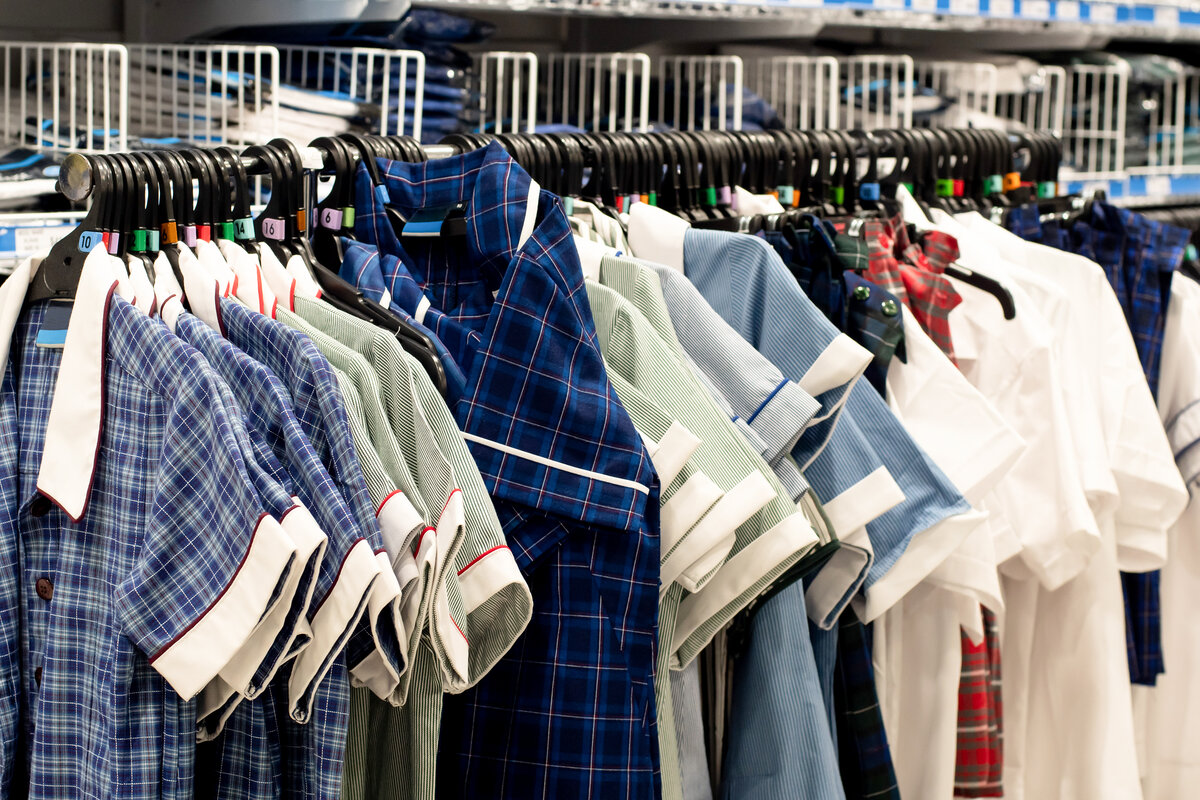
Some schools have dedicated uniform shops with fitting rooms, display racks, and storage. Most do not. If you need to run uniform fittings without a permanent uniform space, you face practical challenges around where families try on items, how you manage stock, and how you maintain some privacy for students. These problems are solvable. Many schools successfully run fittings in temporary spaces.
Common spaces schools use
Without a dedicated uniform area, schools typically repurpose:
Multipurpose or community rooms: These spaces work well because they usually have good access, reasonable size, and can be closed off from general school traffic.
Classrooms: An empty classroom can serve as a fitting area, though furniture may need rearranging.
Library or learning centers: Often large enough to set up fitting zones, though you need to avoid disrupting students if the space is in use during fittings.
Gymnasiums or halls: Good for high-volume fitting days because of size, though they can feel impersonal and lack privacy.
Staff rooms or meeting rooms: Workable for low-volume fittings or by-appointment sessions.
The space does not need to be perfect. It needs to be available, accessible, and sufficient for the number of families you expect.
Setting up a temporary fitting area
Once you have a space, you need to configure it functionally.
Reception point: A table near the entrance where families check in. You confirm their appointment, verify what they are collecting or trying on, and direct them into the fitting area.
Stock area: Tables, shelving units, or clothing racks where items are organized by type and size. Group items logically (all shirts together, all shorts together) so staff can find what they need quickly.
Fitting zone: An area where students can try items on. This might be screened corners, a cordoned section, or simply designated space with portable mirrors.
Collection or payment point: A table where families finalize their purchases, receive their items, and handle payment if applicable.
The goal is a clear flow: families arrive, check in, get fitted, collect items, pay, leave.
Privacy considerations
Students trying on uniforms need reasonable privacy, especially older students or those changing into PE uniforms.
If your space does not have built-in fitting rooms, you can create temporary privacy with:
Portable room dividers or screens: Schools often have folding dividers used for classroom separation. These create visual barriers without permanent construction.
Curtains on portable rails: Curtain tracks on wheeled stands create makeshift fitting areas that can be set up and taken down easily.
Corner arrangements: Position tables or racks to create corner sections that are less visible from the main space.
Bathroom access: If students need to fully change, direct them to nearby bathrooms rather than trying to create change spaces in the fitting area.
The level of privacy needed depends on what students are trying on. If they are only trying shirts or jumpers over their clothes, minimal privacy is fine. If they need to try trousers or full PE kits, provide more private space.
Stock management in temporary spaces
When you do not have permanent uniform storage, managing stock during fittings requires more thought.
Pre-event setup: Bring stock into the fitting area the day before or morning of the event. Store it in labeled boxes or bins organized by item and size.
Stock tracking: Keep a simple system (spreadsheet, checklist, or stock cards) to track what you start with, what gets distributed, and what remains. This prevents running out of popular sizes unexpectedly.
Restock plan: If fittings run over multiple days, plan how you will restock between sessions. Decide who is responsible and where additional stock is stored.
Post-event takedown: After fittings, remaining stock must be moved back to storage. Make sure you have enough people and time allocated for this.
Temporary fitting spaces require more setup and takedown work than permanent shops. Plan for this.
Workflow for busy periods
If you are fitting many families in a short timeframe, workflow matters.
Appointments vs. walk-ins: Appointments control flow better than open drop-in sessions. You know how many families to expect at each time and can staff accordingly.
Staggered start times: Instead of thirty families arriving at 9:00, schedule them in smaller groups every fifteen minutes. This spreads arrival and prevents bottlenecks.
Multiple stations: If volume is high, set up multiple fitting stations. Divide families by year level or surname so they go to different areas. This prevents everyone crowding the same tables.
Pre-bagging orders: If families pre-ordered items and are only collecting (not trying on), bag their orders in advance and have a separate collection point. This keeps them out of the fitting area.
Furniture and equipment needs
Running fittings in a temporary space requires some basic equipment:
Tables: For stock display, check-in, and payment. Folding tables work fine.
Clothing racks or rails: If you have access to portable garment racks, they display items better than piles on tables. But tables are adequate if racks are not available.
Mirrors: Full-length mirrors help students see how items fit. Portable mirrors on stands can be moved into the space for the event.
Seating: Chairs for families waiting or for students sitting to try on shoes.
Storage bins or boxes: To organize stock by size and type.
Most schools already own this equipment or can borrow it from other areas.
Signage and directions
Families arriving for fittings may not know where your temporary fitting area is located.
Use clear directional signage from the main entrance or designated arrival point to guide families to the space.
Inside the fitting area, signs indicating different zones (Check-In, Fittings, Collection) help families understand the process.
Staffing temporary fitting spaces
Without a permanent uniform shop, your fitting staff are likely not uniform specialists. They may be office staff, teachers on duty, or parent volunteers.
This means you need:
Clear instructions: A simple guide explaining the process, where items are located, and how to handle common questions.
Stock familiarity: Staff should know what items you have, what sizes are available, and where things are located in the fitting area.
Size guidance: Basic fitting tips so staff can help families choose appropriate sizes (for example, school shirts typically run large, blazers should allow room for growth).
Someone knowledgeable available: At least one person who knows the uniform requirements well and can answer detailed questions.
Brief staff before the event starts. Walk them through the process and the layout.
Managing multiple days or sessions
If you are running fittings over several days using a temporary space, consider:
Daily setup and teardown: Do you dismantle everything each day or leave the space set up? Leaving it set up is easier but only works if the room can be locked and not needed for other purposes.
Stock security: If you leave stock in place overnight, make sure the room is secure.
Cleaning: Who is responsible for tidying the space between sessions and at the end of the event?
Multiple-day setups require coordination with other staff or departments using school spaces.
When temporary spaces do not work well
Some situations make temporary fitting spaces challenging:
Fittings during school hours with no spare rooms: If all spaces are in use for classes, finding a suitable fitting area may be impossible. Consider running fittings outside school hours.
Very high volume with limited space: Cramming too many families into a small temporary area creates a poor experience. You may need multiple sessions or off-site arrangements.
No secure storage nearby: If you must transport stock from a distant storage location each time, setup becomes burdensome.
In these cases, partnering with an external uniform supplier who manages fittings at their location may be more practical.
Alternative approaches
If temporary on-site fittings are too difficult, schools sometimes use:
Supplier-managed fittings: The uniform supplier runs fittings at their store or at the school with their own portable setup.
Try-on kits sent home: Families borrow sample sizes to try at home, then order the correct size based on fit.
Sizing guides with flexible returns: Provide detailed sizing information and allow free exchanges if items do not fit.
These approaches eliminate the need for a fitting space but have other trade-offs (less control, potential delays, return logistics).
The main principle
You do not need a purpose-built uniform shop to run successful uniform fittings.
You need a space you can repurpose temporarily, a clear process for families to follow, adequate stock organization, and enough staff to manage the event.
Many schools operate this way every year and families receive their uniforms without issue.
Focus on making the temporary setup functional rather than trying to replicate a retail uniform shop.