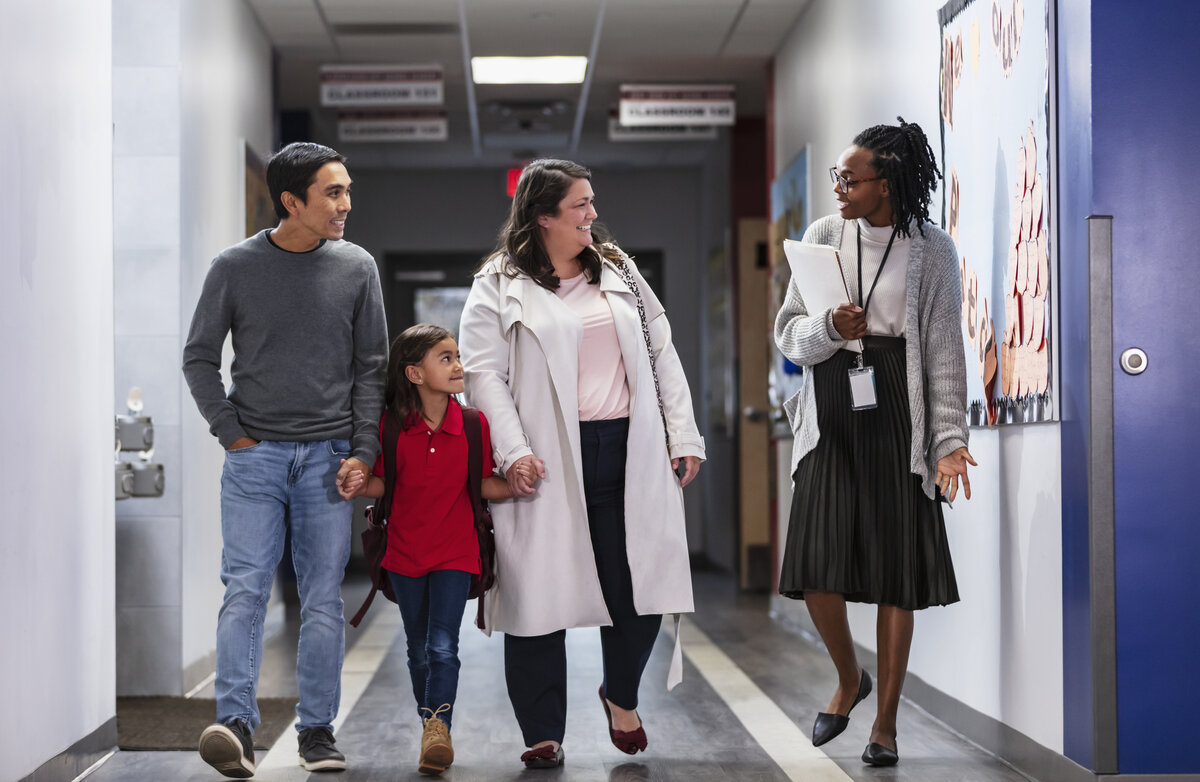
If you run school tours regularly, you will notice that parents ask many of the same questions. Some questions are about logistics, while others are about academic approach, student wellbeing, or school culture. Preparing answers to these common questions helps tour guides (whether staff or students) respond confidently and consistently.
Why preparing answers matters
When your tour guides have clear, accurate answers ready, several things improve. Different families touring on different days receive the same information, which prevents confusion and ensures fair communication. Tour guides feel more comfortable when they know how to answer predictable questions rather than improvising each time. Preparing answers in advance reduces the chance of providing incorrect information about policies or procedures. Tours run more smoothly when guides do not need to pause frequently to look up information or find someone else to answer. This does not mean scripting tours. It means equipping tour guides with the information they need.
Academic questions
Parents want to understand how teaching works at your school.
"What is your approach to homework?"
Be specific. "In primary years, we assign approximately 20 minutes per night focused on reading. In secondary, homework increases by year level, ranging from 30 minutes in Year 7 to about two hours in senior years."
Vague answers like "We believe in balanced homework" do not help parents understand what to expect.
"What happens if my child is struggling academically?"
Explain your actual support process. "Teachers monitor progress closely. If a student is struggling, we contact parents and may arrange additional support through our learning support team, which can include one-on-one sessions, modified work, or referral to specialists."
Parents need to know you have a system, not just good intentions.
"How do you support gifted or advanced students?"
Describe what you actually do. "We differentiate within classrooms, offer extension projects, and run enrichment programs in areas like mathematics and creative writing. In senior years, students can access accelerated pathways."
Avoid education jargon. Say what happens in practice.
"What are your class sizes?"
Give honest numbers. "Class sizes range from 20 to 28 students depending on year level and subject."
If class sizes vary significantly, explain why. "Core subjects like English average 24 students. Electives may be smaller depending on enrollment."
Wellbeing and behavior questions
Parents care deeply about whether their child will be safe and supported.
"How do you handle bullying?"
Parents want specifics, not platitudes. "We take all reports seriously. When bullying is reported, we investigate immediately, speak with all students involved, contact parents, and implement consequences according to our behavior policy. We also work with students on conflict resolution and monitor the situation ongoing."
Do not say "Bullying doesn't happen here." It happens everywhere. Parents respect schools that acknowledge it and explain how they respond.
"What is your approach to student wellbeing?"
Describe concrete programs and structures. "We have a pastoral care system with dedicated wellbeing staff. Each year level has a coordinator who monitors student welfare. We teach wellbeing explicitly through our curriculum and provide access to counseling when needed."
"How do you manage behavior and discipline?"
Outline your approach clearly. "We use a positive behavior framework with clear expectations. Minor issues are handled by teachers. Serious or repeated issues involve year coordinators and parents. We focus on restorative practices rather than purely punitive consequences."
Parents want to know you have structure without being harsh.
"What is your phone policy?"
Be direct. "Phones must be turned off and kept in lockers during school hours" or "Students may have phones but cannot use them during class" or whatever your actual policy is.
This is a question almost every parent asks. Have a clear, one-sentence answer ready.
Logistics and practical questions
Many questions are straightforward but still need preparation.
"What are your school hours?"
State start and finish times, including any variations by year level.
"What does the uniform cost?"
Provide a realistic range. "A full uniform typically costs between $300 and $400 depending on what items families need."
If you do not handle uniform sales yourself, explain where families purchase them.
"How does drop-off and pick-up work?"
Describe the actual process, including where parents park or queue, where students are dropped, and any specific procedures for younger students.
"Do you offer before and after school care?"
If yes, explain hours and how to access it. If no, say so directly. Some schools have nearby services they can mention as alternatives.
"What extracurricular activities do you offer?"
Have a list ready. You do not need to name every single activity, but give a sense of what is available. "We offer a range of sports including soccer, netball, and swimming, plus clubs like chess, debating, drama, and music ensembles."
Enrollment process questions
Parents need to understand next steps.
"What is the enrollment process?"
Walk through the steps clearly. "You submit an enrollment application through our website, we review it and arrange an interview with the principal, and then we send an offer letter. The process typically takes two to three weeks."
"When do enrollments open for next year?"
Provide specific dates if you have them, or a timeframe. "Enrollments for next year open in June."
"Is there a waiting list?"
Be honest. If you have a waiting list for certain year levels, explain how it works. If you generally have places available, say so.
"What are the fees?"
Have clear fee information available. This might be printed material to hand out rather than something tour guides need to memorize, but the information should be easily accessible.
Questions about specific programs
Families often ask about particular areas based on their child's interests.
"What languages do you teach?"
List them. If language offerings vary by year level, clarify that.
"What sports teams do you have?"
Provide an overview of your sports program, including which sports, what levels (interschool, recreational), and how students participate.
"Can students learn a musical instrument here?"
Explain your music program structure. Private lessons, ensemble opportunities, whether there is additional cost.
"What support do you offer for students with learning differences?"
Be specific about your learning support resources, what kinds of needs you can accommodate, and what the process looks like for accessing support.
Questions that need referral
Some questions cannot be answered during tours and need follow-up.
Questions about individual student needs: "My child has ADHD, how will you support them?" or "My child is on an IEP, can you accommodate that?"
These need detailed conversation beyond a tour. The appropriate response is: "That is an important question that deserves proper attention. Our learning support coordinator can meet with you to discuss your child's specific needs. I will make sure you are connected with them."
Financial questions: Detailed questions about fee structures, payment plans, scholarships, or financial assistance should be directed to enrollment or finance staff.
Complex policy questions: Questions that require detailed policy explanation should be referred to appropriate staff rather than answered partially or incorrectly.
Difficult questions
Occasionally parents ask challenging questions.
"Why did you lose accreditation" or similar questions about past problems:
If your school has had public issues, parents may ask about them. Prepare an honest response that acknowledges the situation and explains what changed. Do not be defensive or dismissive.
"Why should we choose your school over X school?":
Avoid criticizing other schools. Instead, focus on what your school offers. "Every school is different. Here is what we prioritize..." Let families make their own comparisons.
"What are your academic results?":
If you publish results, share them. If results are not strong, acknowledge it honestly without making excuses. "Our results are improving. We have implemented new programs focused on literacy and numeracy, and we are seeing growth."
Preparing tour guides
Once you have identified common questions and prepared answers, brief your tour guides.
For staff-led tours: Ensure all staff giving tours have consistent information. Provide a reference document with common questions and approved answers.
For student-led tours: Equip students with answers to questions they can reasonably handle (logistics, daily life, student perspective). Make sure they know which questions to refer to staff.
Update regularly: Policies change, programs evolve. Review and update prepared answers annually or when significant changes occur.
What guides should not guess about
Tour guides (especially students) should never guess about:
- Fees or financial information
- Enrollment procedures or timelines
- Specific academic policies they are uncertain about
- Individual student accommodations or learning support details
- Legal or safety policies
It is always better to say "Let me connect you with someone who can answer that accurately" than to provide incorrect information.
Recording questions you cannot answer
Even with preparation, parents will occasionally ask questions no one anticipated.
Keep a log of these questions. After the tour, find the answer and add it to your prepared list.
Over time, this builds a comprehensive resource that covers nearly everything parents ask.
The tone of answers
How you answer matters as much as what you say. Be honest—do not exaggerate or promise things you cannot deliver. Parents appreciate candor. Be specific, as concrete details are more useful than general statements. Be balanced—you can be positive about your school without claiming perfection. Be responsive—if a parent asks a follow-up question, address it rather than repeating your prepared answer. Prepared answers are starting points for conversation, not scripts to recite rigidly.
Making information accessible beyond tours
Some schools provide written materials that cover common questions.
A simple prospectus or information sheet can include:
- School hours and calendar
- Fee information
- Enrollment process
- Program overview
- Uniform and equipment requirements
- Contact information for follow-up questions
This reduces pressure on tour guides to remember every detail and gives families reference material to review later.
Testing your prepared answers
Before the enrollment season begins, gather the people who will lead tours and walk through your prepared answers together. Ask: Are these answers accurate? Are they clear enough? Are there gaps in what we have prepared? Do student guides (if using them) understand which questions they can answer and which to refer? Refine answers based on this discussion.
The goal
Preparing for common questions is not about controlling the narrative or delivering marketing messages. It is about ensuring families receive accurate, consistent information that helps them make informed decisions about whether your school is right for their child. When tour guides are prepared, tours run smoothly, families feel informed, and your school is represented accurately. That benefits everyone.