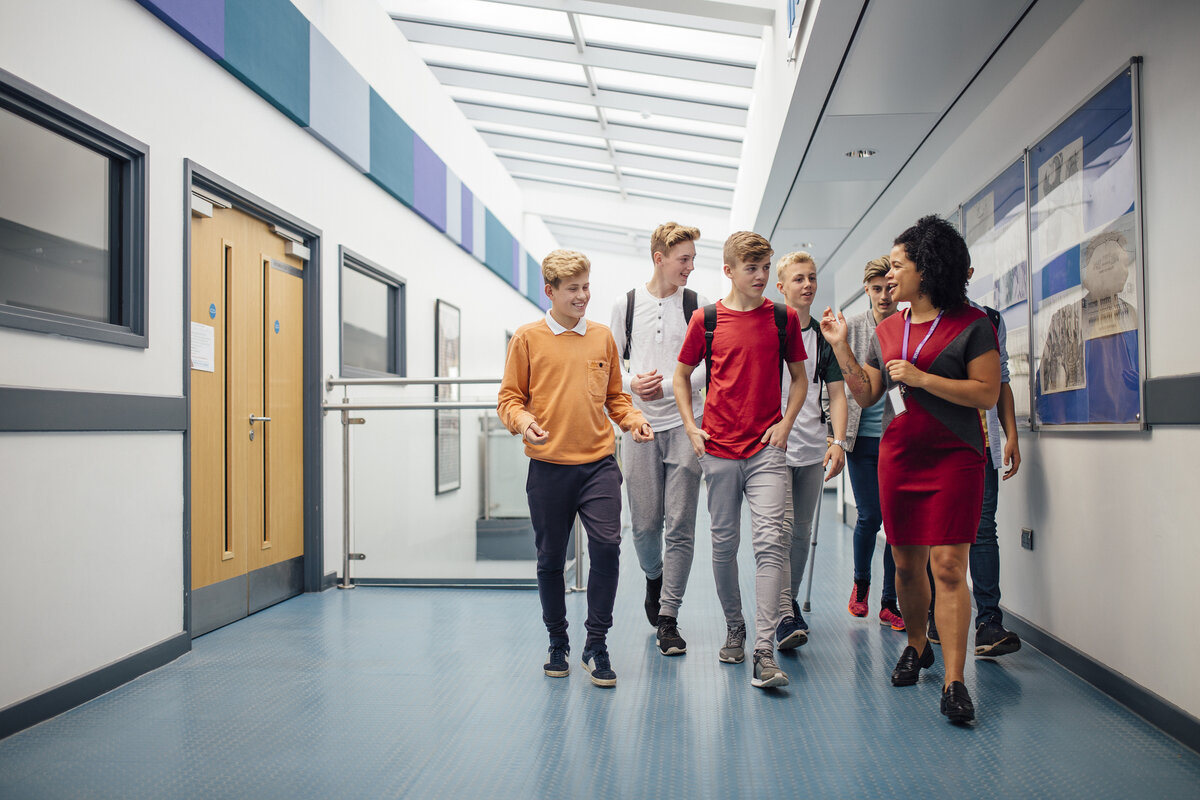
Student-led tours work well because prospective families get to hear from someone currently experiencing your school.
But students need preparation. They need to know the route, understand what to highlight, and be ready to answer common questions.
The challenge is providing this preparation without turning students into scripted tour robots.
Why over-scripting backfires
When schools give student guides a detailed script to memorize and recite, several problems emerge.
It sounds rehearsed: Parents can tell when a student is delivering memorized lines. The tour feels like a performance rather than a genuine conversation.
Students focus on remembering rather than engaging: If a guide is worried about forgetting their script, they are not paying attention to the families or responding naturally to questions.
It removes personality: Different students have different strengths and communication styles. A script flattens these differences and makes all tours sound the same.
It creates pressure: Students who struggle with memorization or public speaking feel anxious about getting the script perfect, which undermines their confidence.
The goal of student-led tours is authenticity. Scripts work against that goal.
What students actually need to know
Instead of scripting what students say, focus on equipping them with the information they need.
The route: Where the tour starts, which areas you visit, the order, where it ends. Students should be able to navigate this confidently.
Key facts about the school: Enrollment numbers, year levels, basic structural information. Students should know these but do not need to recite them in a particular way.
Important locations: What happens in each building or area. The library, science labs, sports facilities, administration office, and what makes each space significant.
Accuracy on policies: If parents ask about homework policy, uniform requirements, or phone rules, students should know the correct information or know to defer to staff.
Who to ask if they don't know: Students will encounter questions they cannot answer. They need to know which staff member is available to help.
This is enough. Students can present this information in their own words.
What to avoid requiring
Some things schools try to script are better left flexible.
Opening remarks: Instead of "Welcome to our school, my name is X and I have been here for Y years, today I will show you..." let students introduce themselves naturally.
Transitions between locations: Students do not need scripted phrases to move groups from one place to another. "Let's head to the library now" works fine.
Personal anecdotes: If you want students to share experiences, let them choose which stories to tell rather than assigning specific ones.
Closing statements: Students do not need a formal conclusion. Thanking families for visiting and asking if they have questions is sufficient.
Briefing format that works
Rather than handing students a script to memorize, use a preparation session that covers:
Walk-through: Take student guides through the tour route yourselves. Show them where to go and what to point out in each location.
Information sheet: Provide a one-page reference with key facts, the route, and common questions. Students can review this before tours but do not need to memorize it.
Question practice: Discuss common questions parents ask and how to answer them. Role-play a few scenarios so students feel prepared.
Examples, not scripts: Share examples of what previous tour guides have said, not as scripts to copy but as illustrations of what works.
Permission to adapt: Explicitly tell students they should use their own words and style. The information needs to be accurate, but the delivery should be theirs.
Handling common concerns
Some teachers worry that without scripts, students will miss important information or say something incorrect.
Missing information: If a student forgets to mention something, that is usually fine. Tours do not need to cover every possible detail. Families can ask questions if they want more information.
Inconsistent tours: Different students will emphasize different aspects of the school based on their own experiences. This is a feature, not a bug. It shows the school through multiple perspectives.
Incorrect information: Brief students on the most commonly misunderstood policies (like phone use, homework expectations, or enrollment process). For everything else, train them to say "I'm not certain about that, but let me connect you with someone who can answer that."
Training for authenticity
Some practices help students lead tours naturally.
Practice tours with feedback: Have students lead practice tours for staff or other students. Give feedback on clarity, pacing, and engagement rather than on whether they used specific wording.
Pair new guides with experienced ones: Let new student guides shadow experienced ones for a tour or two before leading their own. They will learn more from observation than from reading scripts.
Debrief after tours: Ask student guides what questions they got, what went well, what felt awkward. Use this to improve future briefings.
Provide confidence, not scripts: Many students worry they will say the wrong thing or forget important details. Reassure them that their genuine perspective is more valuable than perfect recall.
What to include in a reference sheet
If you create a written guide for students, keep it concise.
Tour route with key points:
- Start: Main office
- First stop: Library (mention study spaces, collection size)
- Second stop: Science labs (highlight equipment, mention which grades use them)
- Continue through route...
Quick facts:
- Number of students
- Year levels offered
- Any distinctive programs or features
Common questions and answers: Listed in a conversational way, not as scripts.
Staff contact: Who students can direct families to for detailed questions.
One or two pages maximum. This is a reference aid, not a manual.
Matching guides to their strengths
Different students excel at different aspects of tour guiding.
Some students are naturally good at public speaking and engaging groups. Others are better in smaller conversations or answering specific questions.
Some students are enthusiastic about academics. Others are more connected to sports, arts, or extracurricular programs.
Let students lean into their strengths. A student passionate about the music program will naturally talk about that more, which is valuable for families interested in music.
You do not need every student guide to present identically.
When some structure helps
There are moments where light structure improves tours without over-scripting.
Opening context: Ask students to briefly introduce themselves at the start (name, year level, how long they have been at the school). This gives families context for who is guiding them.
Logistics at the beginning: "The tour will take about thirty minutes. Feel free to ask questions as we go. At the end, I'll take you back to the office where staff can help with enrollment questions."
Transitions: Students should know to check if families have questions before moving to the next location. "Any questions about the library before we move on?" is simple but effective.
End point: Make sure students know where to bring families at the conclusion and what happens next.
These are structural anchors, not scripts.
Responding to questions students cannot answer
Parents will sometimes ask questions students cannot answer.
Questions about fees, enrollment procedures, specific academic policies, or individual learning needs should be directed to staff.
Train students to say:
- "That's a great question. I'm not sure of the exact details, but the staff at the front desk can help you with that."
- "I don't want to give you incorrect information. Let me check with a teacher who can answer that properly."
This is better than guessing or providing inaccurate information.
Students should never feel pressured to answer everything themselves.
The confidence to be themselves
The most important thing you can give student tour guides is confidence that their authentic perspective is valuable.
Parents are not expecting polished presentations. They are expecting honest insights from current students.
A student who speaks naturally about their experience, even if they occasionally pause or forget a detail, is far more effective than one delivering a memorized pitch.
Brief students on what they need to know. Trust them to present it in their own way.
That balance creates the best student-led tours.